
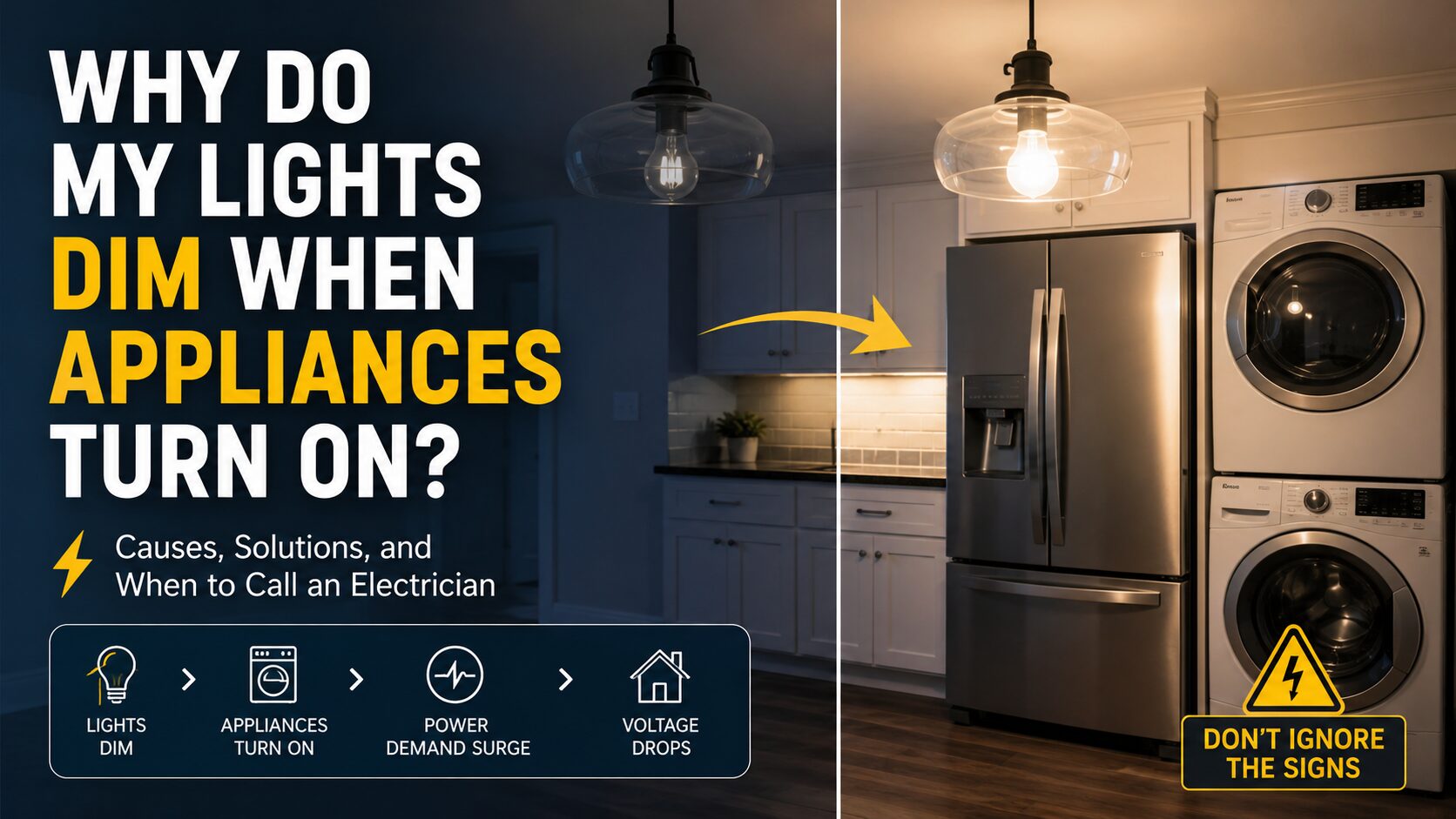
Have you ever noticed your lights briefly dim when your air conditioner starts, your microwave kicks on, or your refrigerator begins running? While an occasional flicker may not seem like a big deal, recurring or severe light dimming can be a sign that your home’s electrical system needs attention.
At Grener Electric, we help homeowners throughout Gainesville and the surrounding North Central Florida communities diagnose and resolve electrical issues safely. If you’ve been wondering why your lights dim whenever certain appliances turn on, understanding the possible causes can help you determine whether it’s a normal occurrence or something that requires a professional inspection.
Is It Normal for Lights to Dim?
In many cases, a very brief and slight dimming of lights is perfectly normal. Large appliances require a significant amount of electricity when they first start. This temporary surge of power, known as inrush current, can momentarily reduce the voltage available to other circuits in your home.
For example, you might notice your lights dim for less than a second when:
- Your central air conditioner starts.
- Your refrigerator compressor kicks on.
- Your heat pump begins operating.
- Your garbage disposal starts.
- A sump pump activates.
- A large air compressor or workshop tool powers up.
If the dimming is subtle, only lasts a moment, and happens occasionally, your electrical system is likely functioning as intended.
However, if the lights dim significantly, stay dim, flicker repeatedly, or multiple areas of your home are affected, it’s time to investigate further.
Large Appliances Draw More Power at Startup
Many household appliances contain electric motors. Motors require considerably more electricity during startup than they do while running normally.
This sudden demand briefly pulls extra current from your home’s electrical system. Depending on the size of your electrical service, wiring, and circuits, you may notice nearby lights dim for an instant.
Common appliances that create startup surges include:
- Central air conditioners
- Heat pumps
- Refrigerators
- Freezers
- Washing machines
- Dryers
- Dishwashers
- Well pumps
- Pool pumps
- Air compressors
The larger the motor, the more noticeable the temporary voltage drop may be.
Your Electrical Panel May Be Undersized
Older homes often have electrical panels that were designed decades ago when families owned far fewer electrical devices.
Today’s households typically include:
- Multiple televisions
- Gaming systems
- Computers
- Smart home devices
- Electric ovens
- Large HVAC systems
- Electric vehicle chargers
- High-powered kitchen appliances
If your electrical panel wasn’t designed to handle these modern demands, voltage fluctuations become more common.
Some older homes still have:
- 100-amp service
- Outdated breaker panels
- Limited circuit capacity
Many modern homes benefit from a 200-amp electrical service, especially if major appliances or future upgrades like EV chargers are planned.
Too Many Devices on One Circuit
Another common cause is an overloaded branch circuit.
If several outlets, lights, and appliances share the same breaker, turning on one high-powered appliance can affect everything connected to that circuit.
For example, your kitchen lights may dim every time you use:
- The microwave
- Coffee maker
- Air fryer
- Toaster oven
This happens because all of those devices are competing for available power on the same circuit.
A licensed electrician can determine whether additional dedicated circuits should be installed to better distribute your home’s electrical load.
Loose Electrical Connections
Loose electrical connections are one of the more serious causes of flickering or dimming lights.
Connections can loosen over time due to:
- Age
- Vibration
- Thermal expansion
- Improper installation
- Corrosion
Loose connections create electrical resistance, which leads to voltage drops and intermittent power problems.
Even more concerning, loose wiring can generate heat, increasing the risk of electrical fires.
Warning signs include:
- Lights that flicker randomly
- Outlets that feel warm
- Buzzing sounds
- Burning odors
- Breakers that trip unexpectedly
These symptoms should always be inspected promptly by a qualified electrician.
Voltage Drop Throughout the Home
Electricity naturally loses a small amount of voltage as it travels through wiring.
Normally, this voltage drop is minimal.
However, excessive voltage drop can occur because of:
- Long wire runs
- Undersized wiring
- Loose connections
- High electrical loads
- Aging electrical systems
If voltage drops become excessive, lights may dim more noticeably whenever heavy appliances operate.
An electrician can perform voltage testing to identify whether your system is experiencing abnormal voltage loss.
Aging Electrical Wiring
Many older homes throughout Florida still contain electrical systems that are decades old.
Older wiring may not have been designed for today’s electrical demands.
Problems may include:
- Undersized conductors
- Aging insulation
- Loose connections
- Previous DIY modifications
- Outdated wiring methods
If your home is 30 years old or older and you’re noticing frequent electrical issues, it may be time for a comprehensive electrical inspection.
Problems with the Utility Service
Sometimes the issue isn’t inside your home at all.
Electrical service from the utility company can occasionally experience voltage fluctuations due to:
- Heavy neighborhood electrical demand
- Storm damage
- Aging transformers
- Loose service connections
- Utility equipment failures
If your neighbors are experiencing similar problems, the issue may originate with the power company.
An electrician can help determine whether the problem lies inside your home or with the incoming electrical service.
Air Conditioners Are Frequent Culprits
Florida homeowners often notice light dimming when the air conditioner starts.
This isn’t surprising.
Central AC systems are among the largest electrical loads in most homes.
As compressors age, they may require even higher startup current, making light dimming more noticeable.
Potential causes include:
- Aging compressor
- Failing start capacitor
- Undersized wiring
- Overloaded electrical panel
- HVAC equipment nearing the end of its lifespan
If the dimming has become noticeably worse over time, both your HVAC system and electrical system should be inspected.
Could an Electrical Panel Upgrade Help?
In many homes, the long-term solution involves upgrading the electrical panel.
Benefits of a newer panel include:
- Increased electrical capacity
- Better load distribution
- Improved safety
- Room for future expansion
- Support for modern appliances
- Greater reliability
A panel upgrade can also prepare your home for:
- Electric vehicle charging
- Whole-home generators
- Solar systems
- Battery backup
- Home additions
- Workshop equipment
If your current panel struggles to meet your household’s electrical needs, upgrading can improve both performance and peace of mind.
Should You Install Dedicated Circuits?
Some appliances should operate on their own dedicated circuits.
These commonly include:
- Refrigerators
- Microwaves
- Dishwashers
- Garbage disposals
- Washing machines
- Dryers
- HVAC equipment
- Electric ranges
- Water heaters
Dedicated circuits prevent multiple high-demand appliances from competing for power on the same breaker.
This often reduces nuisance dimming while improving overall electrical safety.
When Light Dimming Is a Serious Warning Sign
Not every flicker is an emergency, but certain situations should never be ignored.
Call a licensed electrician immediately if you notice:
- Lights dimming dramatically throughout the home
- Lights becoming brighter instead of dimmer
- Repeated flickering without appliances running
- Burning smells
- Buzzing electrical panels
- Warm outlets or switches
- Sparks
- Frequently tripped breakers
- Electrical shocks from outlets
- Smoke or discoloration around electrical devices
These symptoms may indicate dangerous electrical problems that require immediate professional attention.
How Grener Electric Can Help
Diagnosing electrical issues isn’t simply about replacing breakers or installing new wiring. Proper troubleshooting requires specialized testing equipment and experience to identify the true source of the problem.
At Grener Electric, our experienced electricians carefully evaluate your home’s electrical system to determine why your lights are dimming. Depending on what we find, we may recommend:
- Electrical panel inspections
- Load calculations
- Voltage testing
- Circuit troubleshooting
- Dedicated circuit installation
- Electrical panel upgrades
- Wiring repairs
- Whole-home surge protection
- Safety inspections
Our goal is to provide reliable, code-compliant electrical solutions that improve your home’s safety, efficiency, and long-term performance.
Don’t Ignore Repeated Light Dimming
While an occasional, brief dimming of lights can be perfectly normal, recurring or severe dimming often points to an underlying electrical issue. Whether it’s an overloaded circuit, aging wiring, loose electrical connections, or an outdated electrical panel, identifying the cause early can help prevent larger—and potentially more dangerous—problems down the road.
If you’ve noticed your lights dim whenever appliances turn on, don’t wait until the issue worsens. The licensed electricians at Grener Electric proudly serve Gainesville and the surrounding North Central Florida communities with dependable residential electrical services. From troubleshooting mysterious electrical problems to upgrading outdated panels and installing dedicated circuits, we’re here to help keep your home’s electrical system operating safely and efficiently.
If your lights dim often or the problem is getting worse, call Grener Electric, your local electrician in Gainesville, FL, at 833-447-3637 for an inspection.